
Your office is more than just a place to work. It shapes how your team feels when they walk through the door every morning, how clients perceive your brand the moment they step inside, and how efficiently your business runs day to day. When the time comes to transform that space — whether you’re expanding, rebranding, or simply bringing a tired layout into the modern era — choosing the right office renovation contractor is arguably the most important decision you’ll make in the entire process.
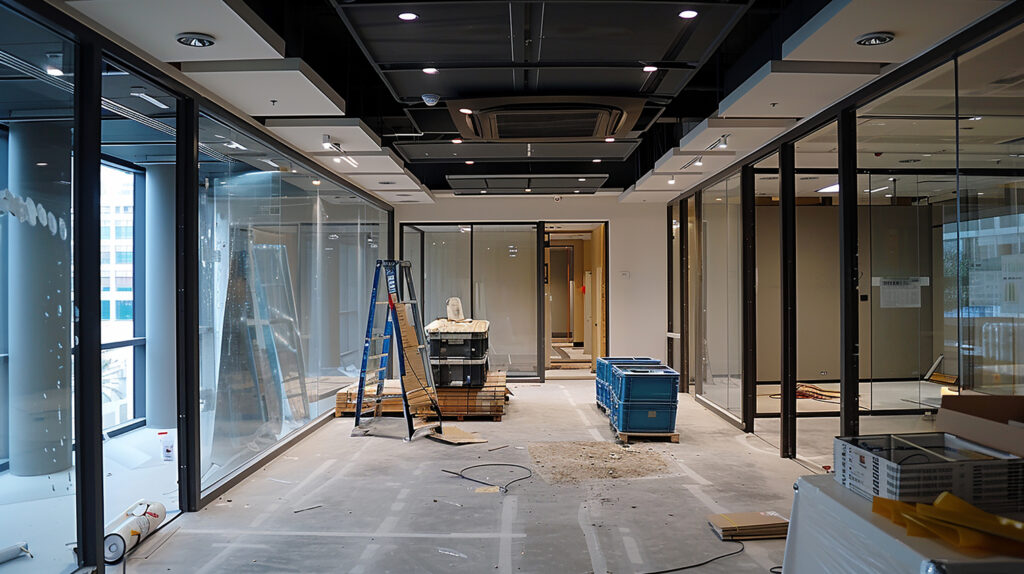
At Alys Buildsworth, one of Kuala Lumpur’s best interior design companies, we’ve spent years guiding businesses through this exact journey. We’ve seen renovations that transformed companies and ones that stalled them — and the difference almost always comes down to who’s holding the tools and managing the project. This guide walks you through what truly matters when evaluating contractors, so you can make a confident, informed choice.
1. Experience in Commercial Spaces — Not Just Residential
There’s a meaningful difference between a contractor who remodels homes and one who genuinely understands commercial environments. Office renovation work involves a unique set of considerations: building management requirements, fire safety compliance, MEP (mechanical, electrical, and plumbing) coordination, data cabling infrastructure, and the need to maintain business continuity during construction.
When vetting candidates, ask specifically about their commercial portfolio. How many corporate offices have they completed? Have they worked in buildings similar to yours? Can they provide references from business clients — not homeowners?
A contractor with deep commercial experience will anticipate issues before they arise: coordinating with building management for after-hours access, understanding how to phase work so your team can keep operating, and knowing which finishes hold up under daily commercial use.
2. A Clear, Itemized Proposal
A professional contractor should not give you a one-page quote with just one total price. Instead, they provide a clear and detailed breakdown. This includes separate costs for labor and materials, a clear project timeline with key milestones, payment terms linked to project progress, and a defined scope of work so everything is clear and there is no confusion.
Vague proposals often lead to budget overruns. If a contractor cannot clearly explain what is included, you have little protection when unexpected costs arise. These extra charges are often blamed on “scope changes” that were never clearly defined from the beginning.
When reviewing proposals, look for:
- Line-by-line breakdown of materials and quantities
- Separate line items for demolition, construction, MEP, and finishing work
- A realistic project timeline with key completion dates
- Explicit terms around what constitutes a scope change and how it’s billed
3. Strong Project Management Capabilities
Construction work involves a complex web of subcontractors, material deliveries, inspections, and sequencing decisions. A skilled office renovation contractor doesn’t just manage tools — they manage timelines, people, and communication.
Ask each contractor how they handle project communication. Will you have a dedicated project manager as your main point of contact? How frequently will you receive progress updates? What’s their protocol when something goes wrong — because something always does?
Contractors who use project management software, maintain documented schedules, and proactively flag issues before they escalate are worth the premium they sometimes charge. Delays in commercial renovation don’t just cost money — they cost productivity, staff morale, and sometimes client relationships.
4. Design-Build Capability vs. Pure Construction
There are two main models for office renovation: the traditional approach, where you hire a designer separately and then engage a contractor to execute the plans, and the design-build model, where a single firm handles both design and construction under one roof.
Both can work well, but they suit different situations. The traditional model gives you more control over design decisions and allows you to select specialized talent independently. The design-build model streamlines accountability — there’s no pointing fingers between the designer and the contractor when something doesn’t line up.
5. Licensing, Insurance, and Compliance
This one shouldn’t be optional, yet it’s surprisingly easy to overlook in the excitement of seeing a beautiful portfolio or receiving a competitive quote. Any legitimate office renovation contractor should carry public liability insurance, contractor’s all-risk insurance, and the appropriate trade licenses required by local authorities.
In Malaysia, renovations in commercial buildings also typically require approval from building management and, depending on the scope, submissions to BOMBA (the fire department) and local municipal authorities. A qualified contractor will know which permits apply and handle the application process on your behalf.
Working with an unlicensed or underinsured contractor to save on costs is a false economy. If something goes wrong — a worker is injured, a structural issue emerges, or the building management penalizes you for unauthorized works — the liability falls on you.
6. References and a Verifiable Track Record
Any contractor worth hiring will be happy to provide client references — and you should call them. Portfolio photos show what’s possible; a five-minute conversation with a former client tells you what working with that contractor is actually like.
When speaking with references, ask:
- Did the project finish on time and on budget?
- How did the contractor handle unexpected issues?
- Was communication consistent and professional throughout?
- Would you hire them again?
If a contractor hesitates to provide references, or if all their references are from residential projects, treat that as a meaningful signal.
7. Understanding of Your Business Operations
The best contractors take time to understand not only how you want your office to look, but also how your business works. They will ask how many people will use the space. They will also ask whether some departments need quieter areas, or if certain teams need more space to work together. They may also ask if you need meeting areas for clients, or if the office is mainly for internal operations.
A contractor or design build firm that asks these questions early is thinking beyond just construction. They are thinking about the final result. They want to create a workspace that supports your team and helps your business run better. This approach is very different from contractors who only focus on completing the job.
8. Post-Completion Support and Defect Liability
The job is not over on handover day. A professionally managed renovation project includes a defect liability period, usually between 12 months. During this time, the contractor is responsible for fixing any defects that appear after the project is completed. This should be clearly written in your contract.
Ask prospective contractors how they handle post-completion issues. Do they have a dedicated team for aftercare? What’s their average response time for defect reports? A contractor who is vague or dismissive about this stage is signaling that their commitment ends when the final payment clears.
Before You Sign: A Few Practical Tips
- Get at least three proposals before making a decision. This helps you understand the market pricing and makes it easier to spot prices that are too high or unusually low.
- Don’t automatically choose the cheapest option. In renovation work, the lowest bid often reflects either cut corners on materials, an underqualified team, or a quote that will expand significantly once work begins.
- Visit a completed project in person if you can. Photos can be edited; walking through a finished space gives you a real sense of craftsmanship and quality.
- Clarify communication expectations upfront. Agree on how often you’ll receive updates, who your main contact will be, and what the escalation path looks like if issues arise.
- Get everything in writing. Verbal agreements, no matter how sincerely made, are difficult to enforce. A well-drafted contract protects both parties.
Frequently Asked Questions About Choosing an Office Renovation Contractor
1. How do I verify that a contractor is legitimate in Malaysia?
Ask for their company registration number and CIDB (Construction Industry Development Board Malaysia) registration. CIDB registration is required for contractors undertaking construction work above a certain value in Malaysia, and the registration grade indicates the scale of projects the contractor is qualified for. Beyond registration, ask for references from recent commercial clients and follow up on those references directly.
2. What should be included in an office renovation quotation?
A detailed quotation should break down labour and materials separately, specify the brands and grades of materials being used, state the project timeline with key milestones, clarify what is and is not included in the scope, and explain how variations will be priced and approved. A quotation that gives only a lump-sum figure without this breakdown makes it impossible to compare against alternatives or to manage costs once work begins.
3. Should I choose the cheapest contractor?
Consistently choosing the lowest quote is one of the most reliable ways to end up with a poor outcome. The cheapest tender is often low because something has been excluded from the scope, inferior materials have been specified, or the contractor is not financially stable enough to absorb the normal costs of doing the work properly. Evaluate contractors on their track record, their proposal quality, and their demonstrated understanding of your project — not on price alone.
4. What happens if the renovation goes over budget?
This is one of the most important questions to ask before appointing a contractor, not after a problem occurs. A good contractor will have a clear variation process: any scope change is priced and approved in writing before work proceeds. Contractors who allow variation costs to accumulate without client approval, then present a large additional invoice at the end, are a significant risk. Ask specifically how variations are handled — and walk away from any contractor who cannot give you a clear, documented answer.
Conclusion
An office renovation is a significant investment in your space, your brand, and your people. The contractor you choose will either protect that investment or put it at risk. Rushing the selection process, focusing only on price, or failing to check credentials can turn an exciting transformation into a long and costly experience.
Take time to ask the right questions, confirm the answers, and trust your instincts during the consultation process. The right contractor should feel like a partner who listens, gives advice, and is committed to delivering a result that truly supports your business.
At Alys Buildsworth, we have built our reputation as one of the top-tier office renovation contractor companies in Kuala Lumpur by approaching every project with this mindset. Whether it is a renovation or a new build, we focus on both design and construction quality. If you are planning an office transformation and want a team that brings strong design ideas and construction expertise, we would love to hear about your space.